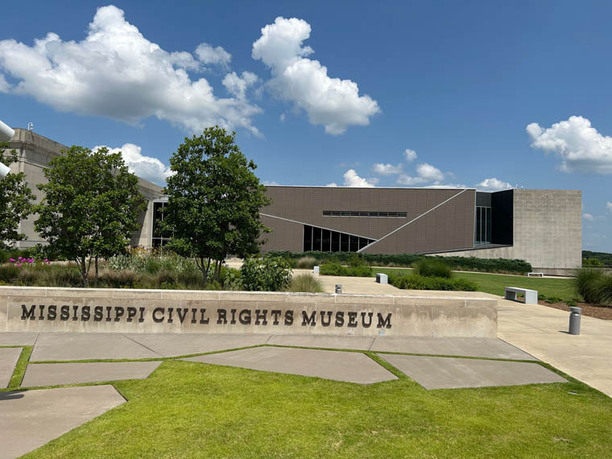
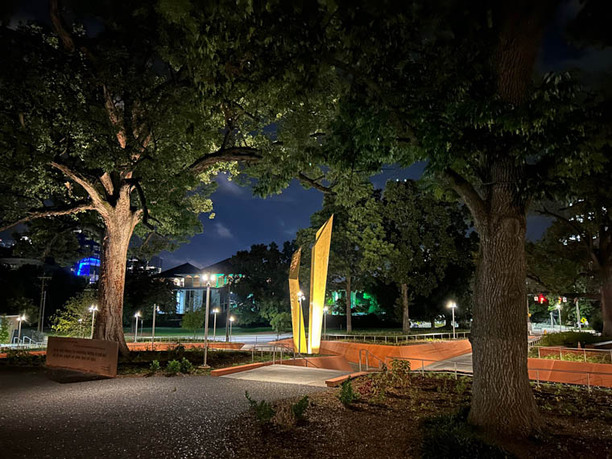
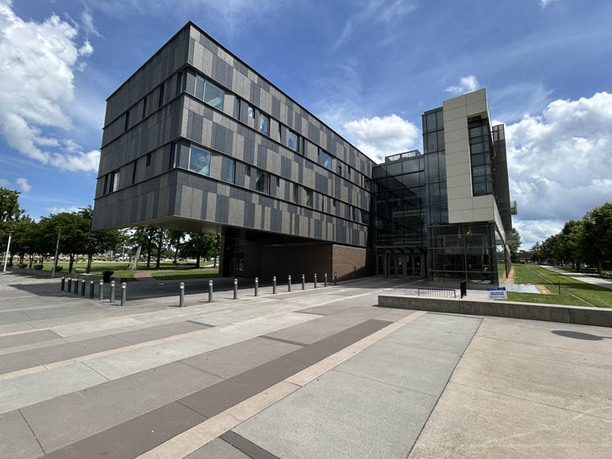
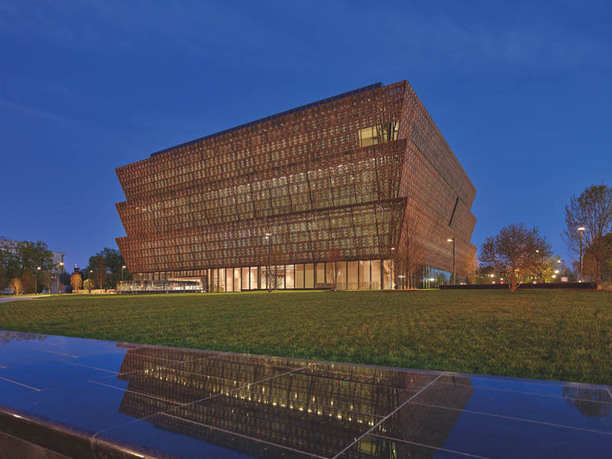
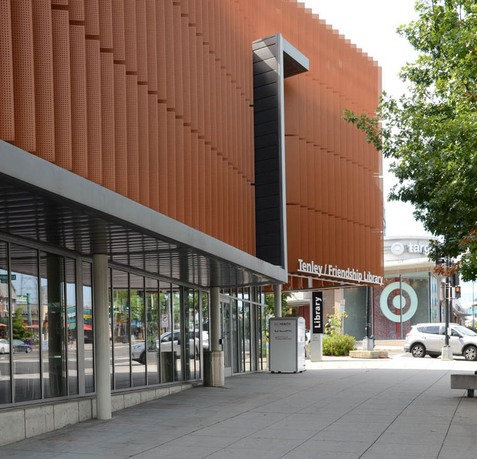
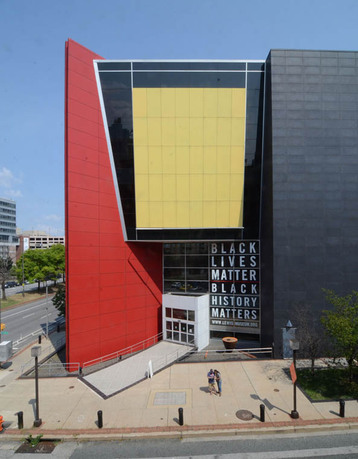
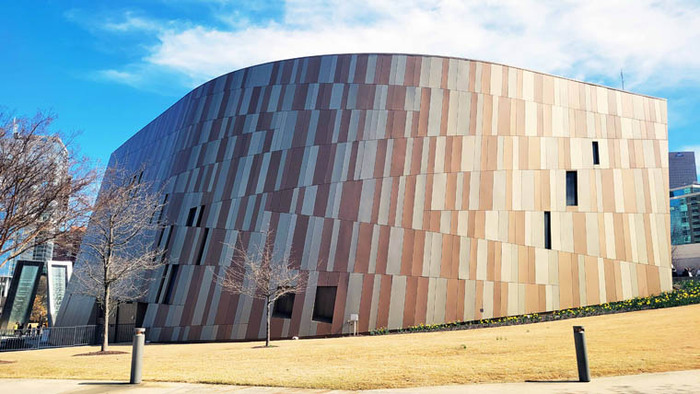
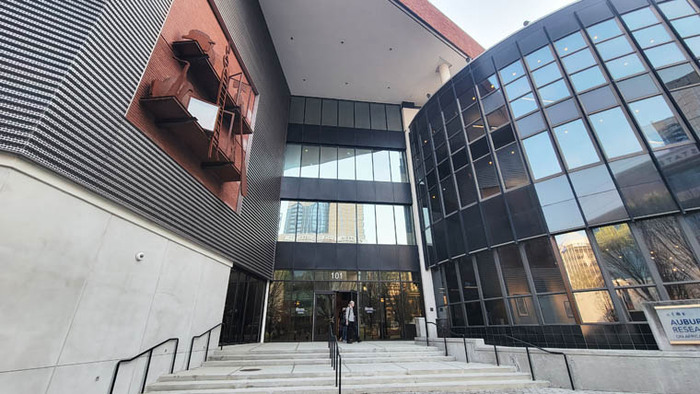
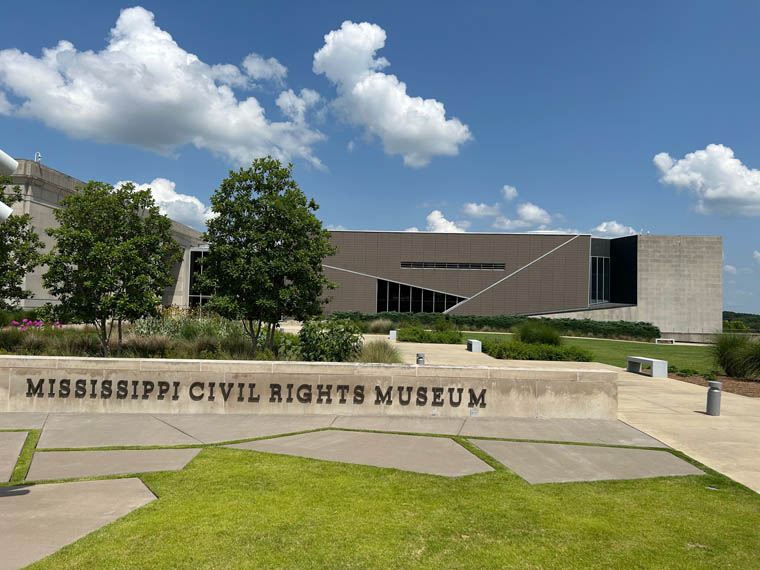
Arthur J. Clement, “Mississippi Civil Rights Museum, designed by Philip Freelon / Dale Partners Architects, built 2017, Jackson,” 2025. Digital photograph. Courtesy Arthur J. Clement
Over a four-decade career, Philip G. Freelon (1953–2019) became renowned for public architecture centered on the African American experience and community uplift. He designed dozens of libraries, museums, cultural centers, and campus buildings, and led the design of the Smithsonian’s National Museum of African American History and Culture. The first African American recipient of the American Institute of Architects’ Thomas Jefferson Award for Public Architecture, Freelon is the subject of this first volume on his life and work, exploring his practice, collaborative leadership, mentorship, and the idea-driven, inclusive approach of his architecture. The project brings together a range of voices to explore the approaches he took to different building types, the stories and metaphors in his work for African American communities, and the design-for-all ethos of his buildings and landscapes.
Arthur J. Clement was the first African American to graduate from the North Carolina State School of Design with a bachelor’s degree in architecture. He is a retired first lieutenant in the United States Army and had a 50-year career with several architectural, construction, and program management firms. He now has an in independent architectural history consulting company. Over the past twenty years, Clement has completed numerous campus heritage studies for colleges and universities throughout the Southeast. He previously served on the advisory committee for the National Trust for Historic Preservation’s Historically Black Colleges and Universities (HBCU) Cultural Heritage Stewardship Initiative. He also served on the board of trustees for the Georgia Trust for Historic Preservation.
Emily Makaš has a PhD in the history of architecture and urbanism from Cornell University and a master’s in historic preservation from Columbia University. Her research explores connections between memory and identity and the built environment. Her key publications include Architectural Conservation in Europe and the Americas (Wiley, 2011, coauthored with J.H. Stubbs) and Capital Cities in the Aftermath of Empires: Planning in Central and Southeastern Europe (Routledge, 2010, coedited with T.D. Conley). She serves on the Charlotte Mecklenburg Historic Landmarks Commission. Makaš has led teams of faculty and students pursuing public history and heritage projects exploring design and identity, including a series of exhibitions under the title Container/Contained: Phil Freelon: Design Strategies for Telling African American Stories (Auburn Avenue Research Library, Atlanta, 2024; Florida Agricultural and Mechanical University, Tallahassee, 2023; North Carolina Museum of Art, Raleigh, 2022; Harvey B. Gantt Center for African-American Art and Culture, Charlotte, 2021).