Publication
-
Urban refugiaMatthew Gandy
AuthorMIT Press, 2028 -
GRANTEE
Matthew GandyGRANT YEAR
2026

Madlener House
4 West Burton Place
Chicago, Illinois 60610
Telephone: 312.787.4071
info@grahamfoundation.org
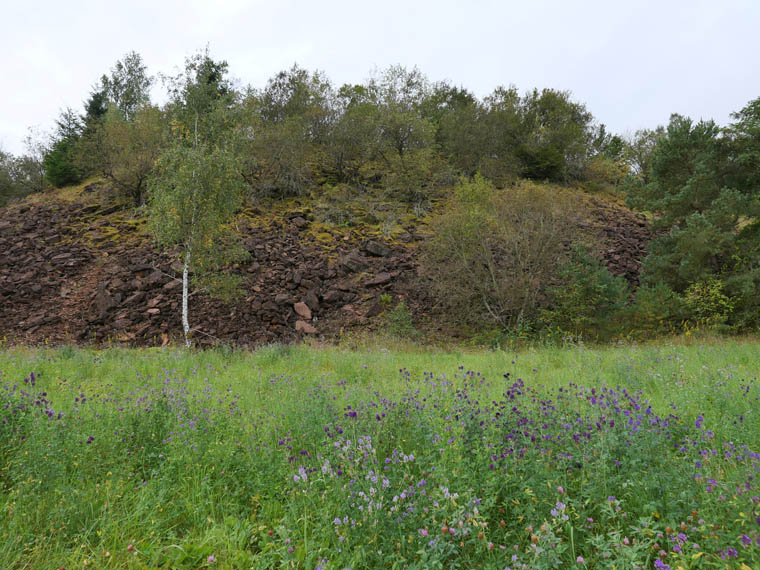
Matthew Gandy, “Brucherbierg-Lallengerbierg, Esch-sur-Alzette, Luxembourg,” 2021. Digital photograph. Courtesy Matthew Gandy
The idea of the city as a form of sanctuary forms a powerful counter narrative to recurring anti-urban sentiments that have suffused a variety of reactionary social and political constellations. Urban refugia examines the cultural and ecological dimensions to urban refugia as an alternative to the kind of utilitarian ecologies that dominate urban discourse and an argument against “generic ecologies” and systems-based conceptions of urban nature is developed. The texture of everyday spaces is retained throughout to emphasize complexity, nuance, and even the sense of magic to be encountered in ordinary spaces. The multisensory aspects of the analysis mark part of a wider interest in reconnecting human attention with the material realm by linking aspects of critical phenomenology, political ecology, walking methodologies, and other approaches with the vibrant presence of the multispecies city.
Matthew Gandy is professor of geography at the University of Cambridge and an award-winning documentary film maker. He previously worked at University College London (UCL) where he was founder and first director of the UCL Urban Laboratory. He has published articles in many leading journals including International Journal of Urban and Regional Research, New Left Review, and Society and Space. His books include Concrete and Clay: Reworking Nature in New York City (MIT Press, 2002); The Fabric of Space: Water, Modernity, and the Urban Imagination (MIT Press, 2014); Moth (Reaktion, 2016); and Natura Urbana: Ecological Constellations in Urban Space (MIT Press, 2022). He is working on zoonotic aspects to urban epidemiology as part of a wider conceptual framing for the multi-species city.
Copyright © 2008–2026 Graham Foundation. All rights reserved.