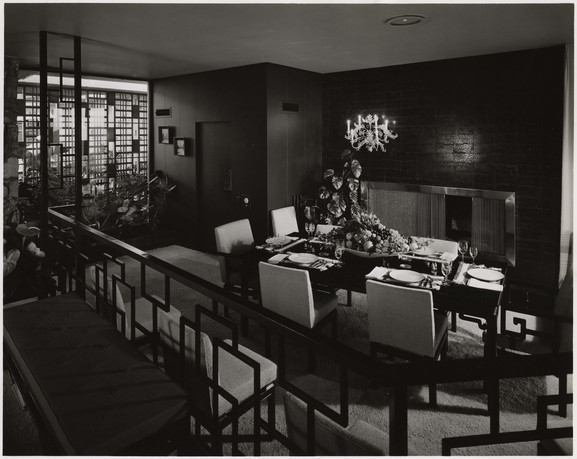
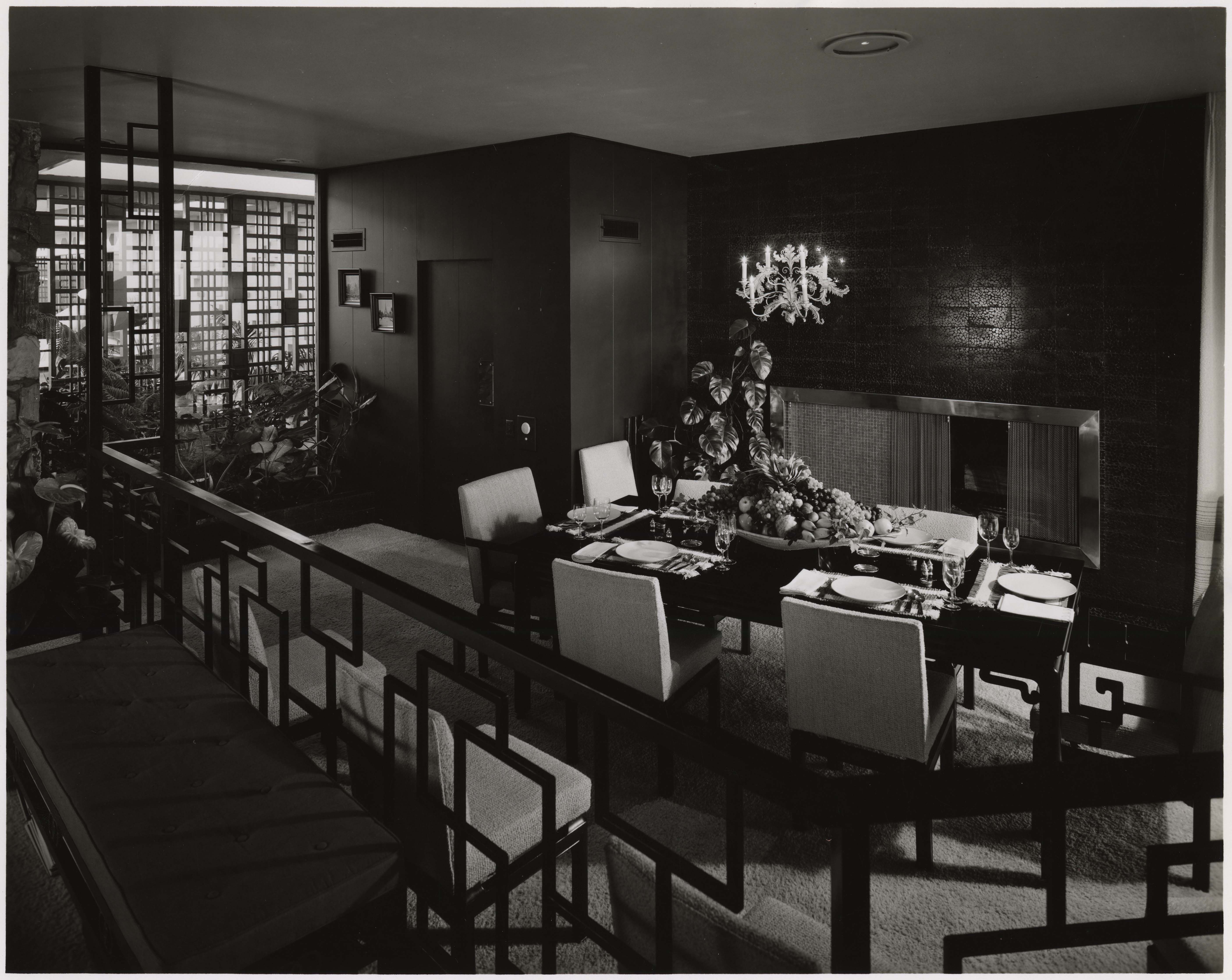
Paul R. Williams, “Frank Sinatra residence, Beverly Hills, (interior view),” 1956. Photograph, 8 x 10 in. Courtesy of the California History Room, California State Library, Sacramento, California. Photo: Merge Studios
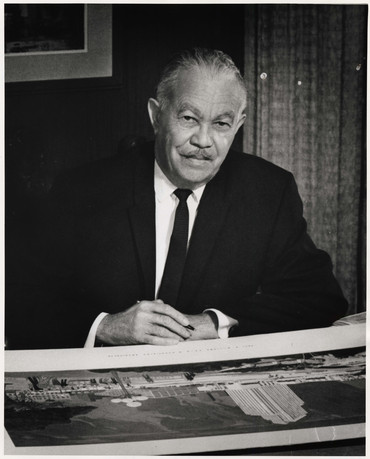
The most prominent Black American architect of his generation, Paul R. Williams (1894–1980), helped shape his native Los Angeles during a period of transformational growth. Acclaimed as an architect to the stars, Williams brought the same rigor and masterful attention to detail to a remarkable range of residential, civic, religious, commercial, and hospitality projects. This major exhibition, Paul R. Williams: Architect for Living, demonstrates the impressive breadth of his contributions, showcasing many never-before-exhibited drawings and photographs from his archive. By centering Williams, the exhibition calls attention to aspects of Los Angeles’s built environment too often excluded from mainstream architectural discourse, revealing narratives of racial discrimination, stylistic diversity, and the city’s growth in the process. At the same time, the exhibition looks beyond Los Angeles, highlighting Williams’s notable contributions across the United States and Latin America. This exhibition is presented alongside projects at the Getty Research Institute and the University of Southern California Fisher Museum of Art, marking the largest and most comprehensive museum presentations to date of this influential figure.
Staci Steinberger is curator of decorative arts and design at the Los Angeles County Museum of Art (LACMA), where she has worked since 2009 and serves as the organizing curator for this exhibition. A specialist in modern and contemporary design, she holds an MA from the Winterthur Program in American Material Culture at the University of Delaware. Steinberger has organized numerous exhibitions at LACMA, including Digital Witness: Revolutions in Design, Photography, and Film (2024–25) with Britt Salvesen; ‘What Would You Say?’: Activist Graphics from LACMA (2022–23); West of Modernism: California Graphic Design, 1975–1995 (2018–19); Found in Translation: Design in California and Mexico, 1915–1985 with Wendy Kaplan (2017–18); Awazu Kiyoshi, Graphic Design: Summoning the Outdated with Hollis Goodall (2016–17); and Jack Stauffacher: Typographic Experiments (2013). She has also contributed to several additional publications, including California Design, 1930–1965: ‘Living in a Modern Way’ (LACMA and MIT Press, 2011), and Coded: Art Enters the Computer Age, 1952–1982 (LACMA and DelMonico Books, 2023).
Architectural historian and interior designer Sarah Locke joined the Decorative Arts and Design department at LACMA in November 2024 to serve as the dedicated research assistant for Paul R. Williams: Architect for Living. As president of Docomomo US/Southern California and former director of Long Beach Heritage, Locke is a leading advocate for the region’s modern legacy. Her heritage conservation work includes Historic American Buildings Survey (HABS) documentation of the Eames House and the Case Study House National Register nomination, alongside the successful local landmark designation of Edward Killingsworth’s Case Study House #25. Her dedication to the intersection of historical documentation and the physical preservation of Southern California’s built environment serves as the foundation for her current research on the diverse body of work produced by Paul R. Williams.
Architect and educator Germane Barnes, who is designing Paul R. Williams: Architect for Living, founded Studio Barnes in 2017. Studio Barnes examines architecture’s social and political agency, blending rigorous historical research with speculative design to explore how the built environment shapes and is shaped by culture, race, and community. Projects by Barnes have entered the permanent collections of the San Francisco Museum of Modern Art, LACMA, and the National Museum of African American History and Culture. His architectural interventions and conceptual projects have been featured in The New York Times, Architectural Record, Domus, and other influential publications, with coverage highlighting both the conceptual rigor and social relevance of his work. One of his most widely recognized projects, Griot, was presented as part of 18th International Architecture Exhibition—La Biennale di Venezia, Venice (2023), Laboratory of the Future, earning international attention for its innovative integration of narrative, history, and community in architectural form.
The Los Angeles County Museum of Art (LACMA) is a global art museum that is the largest in the western United States. LACMA's mission is to serve the public through the collection, conservation, exhibition, and interpretation of significant works of art from a broad range of cultures and historical periods, and through the translation of these collections into meaningful educational, aesthetic, intellectual, and cultural experiences for the widest array of audiences