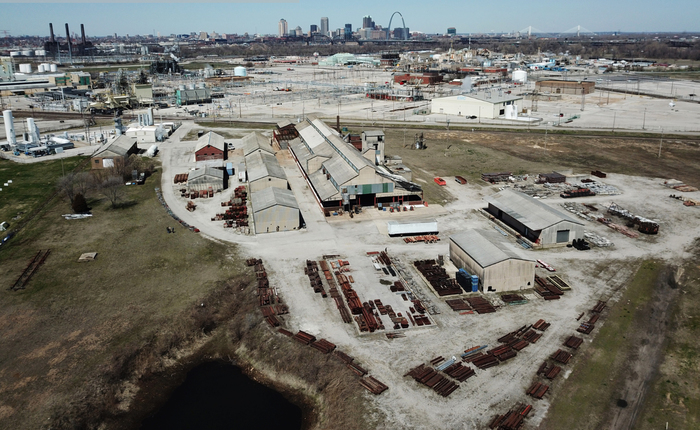
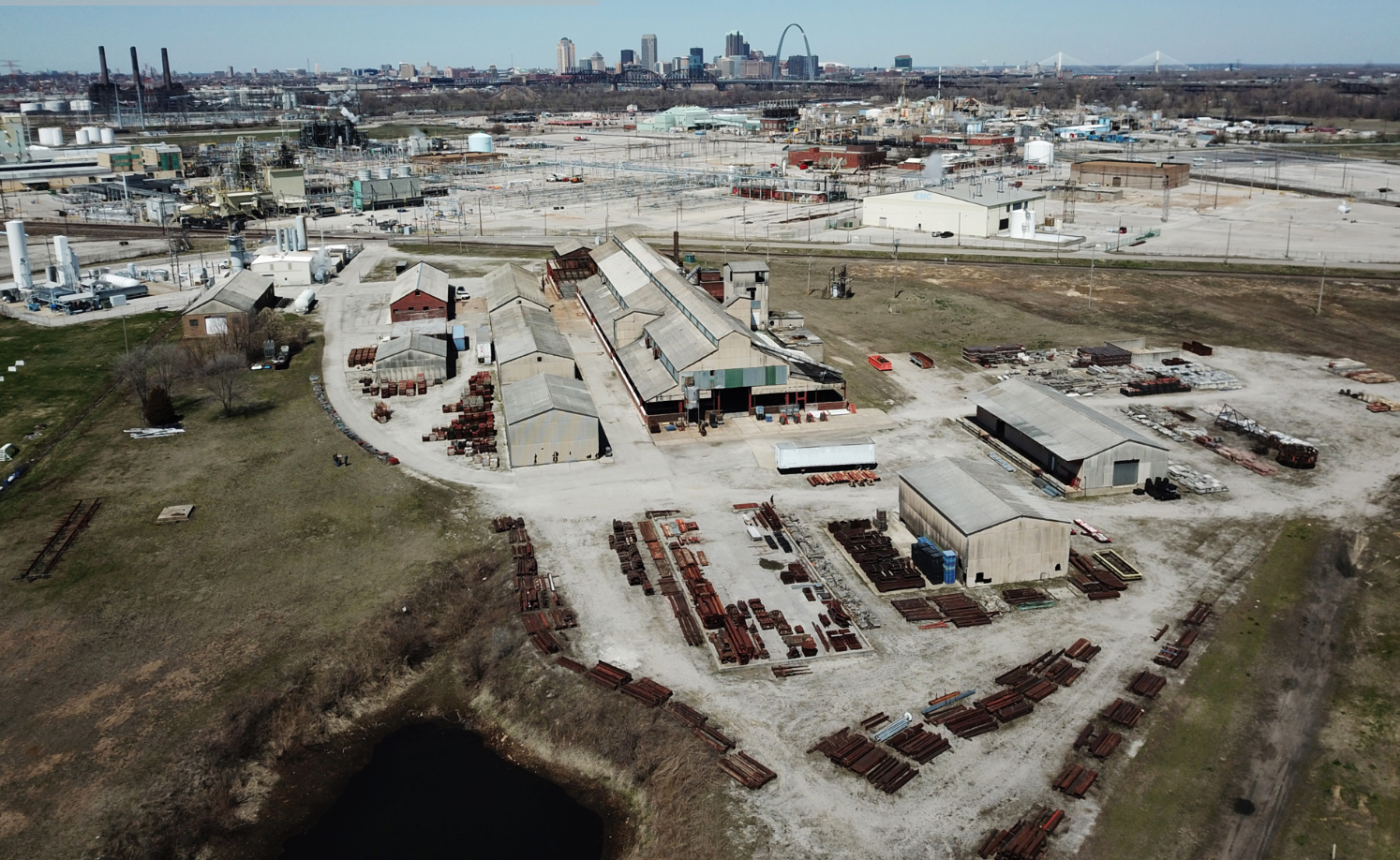
Aaron Owens, “Oblique aerial view from Sauget, Illinois, with the campus of the National Building Arts Center in the foreground, the former Monsanto campus in the midground, and the skyline of St. Louis, Missouri at a distance,” 2017. Digital photograph. Courtesy National Building Arts Center, Sauget
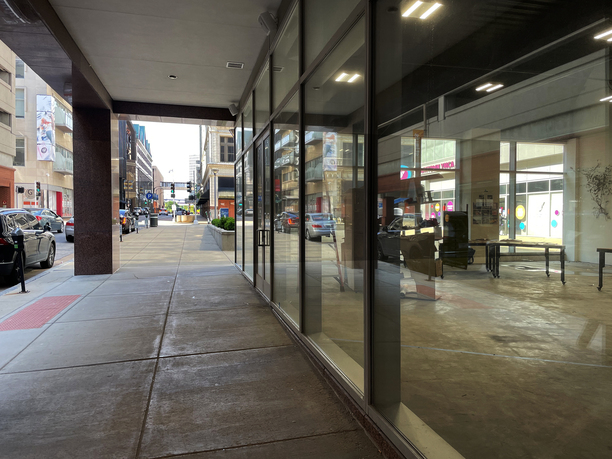
Preservation Station 777 is a cross-river exhibition bridging two key sites of architectural and social heritage, both now endangered by disinvestment and environmental degradation: downtown St. Louis, Missouri, and the village formerly known as Monsanto, Illinois, where the National Building Arts Center (NBAC) is located. Centered on NBAC’s architectural collection—the nation’s largest—the project culminates in a three-month immersive exhibition connecting both sides of the Mississippi River and exploring preservation as a public, embodied practice. In preparation, the project reimagines the role of the docent through the creation of an NBAC Interpretive Corps, whose members engage with the collection through interdisciplinary workshops and hands-on training with scientific and cultural experts. Together, the exhibition and Interpretive Corps aim to cultivate new approaches to preservation at the intersection of architecture, design, environmental knowledge, and public health.
Erika Allen is an artist and the founder and chief executive officer of Urban Growers Collective; president of Green ERA Educational nonprofit; and coowner of Green Era Sustainability Partners. Allen founded and served as the director of Growing Power – Chicago from 2002 to 2017. She cofounded the Chicago Food Policy Action Council; serves on the board of Grow Greater Englewood and Leadership Council for Growing Home; and is an advisor for the Community Food Navigator project. Allen was appointed to the Illinois Leadership Council for Agricultural Education (ICAE) from 2022 to 2024. The Biden administration appointed Allen to the Farm Service Agency Committee for Illinois. She is also cochair of the Food Equity Council for the City of Chicago. Allen received her BFA from the School of the Art Institute of Chicago and her MA in art psychotherapy from the University of Illinois at Chicago. She uses her experience as a visual artist to support individuals and organizations in realizing their vision of social and economic change. She is passionate about social justice and working with multicultural groups in the elimination of racism, related oppressions, and the root causes of poverty by integrating creative and therapeutic techniques alongside food security and community development.
D. Graham Burnett is the Henry Charles Lea Professor of History and History of Science at Princeton University and coeditor of Attensity! A Manifesto of the Attention Liberation Movement (Crown, 2026) as well as Twelve Theses on Attention (Princeton University Press, 2022), both with the Friends of Attention coalition—creators of the nonprofit Strother School of Radical Attention in Brooklyn, which Burnett directs. He cocurated the Practices of Attention program at the 33rd São Paulo Biennial and is associated with the speculative collective ESTAR(SER). In 2023, he was a visiting artist at the Academy of Fine Arts in Helsinki, Finland. Burnett writes widely on technology, culture, and media.
Jennifer Colten works with photography focusing on landscapes where social, ecological, and cultural histories are buried, hidden, or unacknowledged. For over a decade, her work has centered within communities and places of the American Bottom—a geographical stretch along the Mississippi River in Illinois, directly across from St. Louis. Past and ongoing projects have received support from the Mellon Foundation Humanities for All Times, the Andy Warhol Foundation with The Luminary (St. Louis), the Illinois Humanities, Mid-America Arts Alliance, and Regional Arts Commission Fellowship for supporting works that address the region’s social and racial inequities. In addition to private collections, Colten’s photographs have been included in a number of international public collections, including at the Denver Art Museum, Museum für Fotografie (Braunschweig, Germany), Museum Hundertwasser (Vienna, Austria) as well as Museo de Arte Moderno (in Bogotá), Museo de Antioquia, and Bellas Artes Instituto (in Medellin), across Colombia.
Kevin Harris (b. 1975, Oklahoma City) lives and works in St. Louis as an artist, curator, composer, and engineer. His practice broadly focuses on using multimedia performances and installations to establish methods of communication and communal conditions by which to explore the psychological manifestations of contemporary life under industry and empire. Harris is known for his ambitious large-scale work involving sound, video, electronics, kinetics, and sculpture. He was artist in residence at the Contemporary Art Museum St. Louis, where he curated the sound art series, Audible Interruptions. He is currently program director at the nonprofit performing arts organization, HEARding Cats Collective and serves as artistic director of the Center for Aesthetic Research. His most recent solo exhibition, An Investigation into the Origins and Subsequent Qualitative Inner Life of Universal Media, constructed a universal graphic symbol language as a way to transcend language barriers associated with international forms of resistance, which was realized as a multimedia kinetic installation. His current focus is on designing a trilogy of multimedia performance systems for video, dance, sound, kinetics, and sculpture. The first system, Dream Phase, was premiered at The Luminary in 2024. The second system, Endometric, was commissioned by the Charlotte Street Foundation in 2026. Harris holds a BA in music composition and an MFA in sculpture.
Lynne Smith is a postdisciplinary artist, designer, and educator. Through sustained attention to landscape, she explores complex ecologies and themes of fragility and resilience. Narratives unfold as weavings, archives, sculptures, and public gardens. Her current work at the National Building Arts Center transforms a loading dock into a wetland oasis for amphibians and interspecies engagement. Research and relational activity are central to Smith’s practice, in which materials serve as conduits for embodiment, connection, and knowledge. Smith teaches in the Sam Fox School of Design & Visual Arts at Washington University in St. Louis, facilitates workshops for the Mildred Lane Kemper Art Museum and community-based nonprofits, and develops independent educational programming. Smith received grants from the IMSE Lab at Washington University, the Luminary Futures Fund, a regranting initiative of the Andy Warhol Foundation, and the Regional Arts Council. She is one of 47 artists participating in Counterpublic’s 2026 triennial exhibition.
Eric Ellingsen is an artist and writer serving as executive director of the National Building Arts Center (NBAC). A former professor of landscape architecture and architecture at Cornell University, the Illinois Institute of Technology, and Washington University in St. Louis, Ellingsen previously codirected the Institute for Spatial Experimentation (IfREX) at the Berlin University of the Arts. He opened Species of Space in 2009 as a platform of artistic experimentation and verbivisualvoco collaborations. Through Perceiving Academy, Ellingsen develops site-sound specific, cross-disciplinary walking programs partnering with municipalities and art organizations in Greece, Iceland, Cyprus, and Chicago (Sullivan Gallery). Since relocating to St. Louis in 2017, Ellingsen has served as coprincipal investigator with the Griot Museum of Black History on the Black Herstory Initiative, supported by Monument Lab, and was the subject of a solo exhibition at the Contemporary Art Museum St. Louis (CAM). His research has been supported by the Graham Foundation, the Van Alen Institute, and the TURN Fund, among others. Ellingsen holds graduate degrees in architecture and landscape architecture from the University of Pennsylvania and in classical philosophy from St. John’s College.
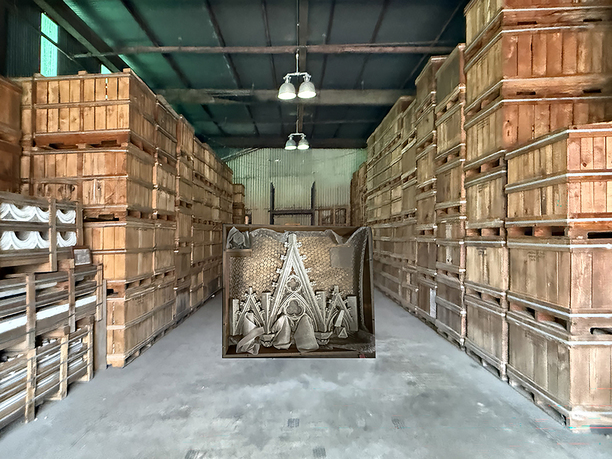
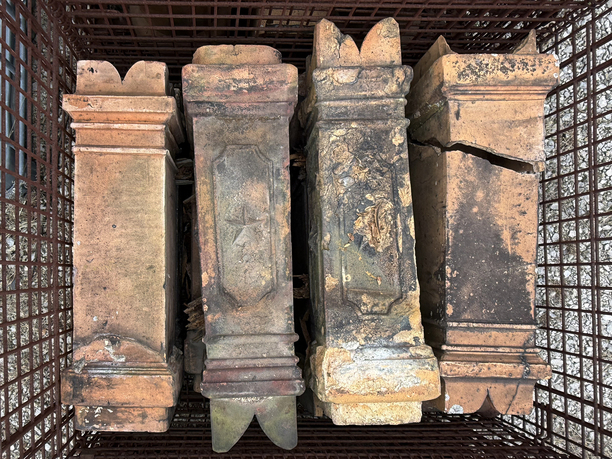
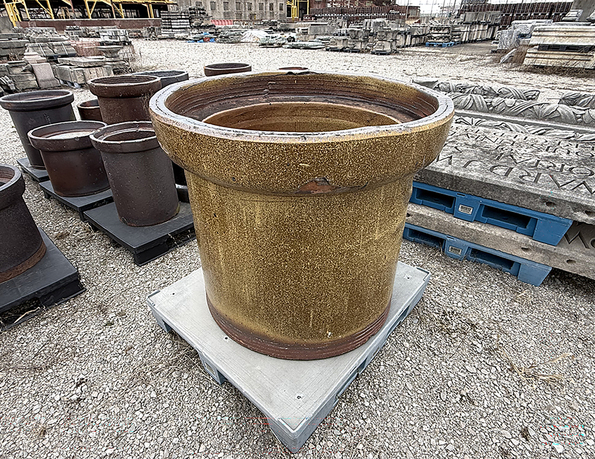
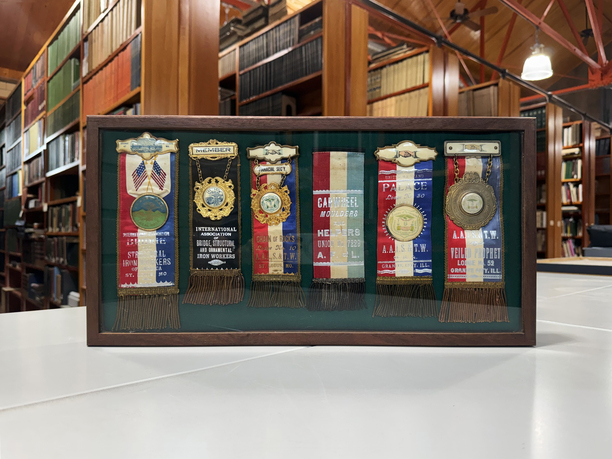
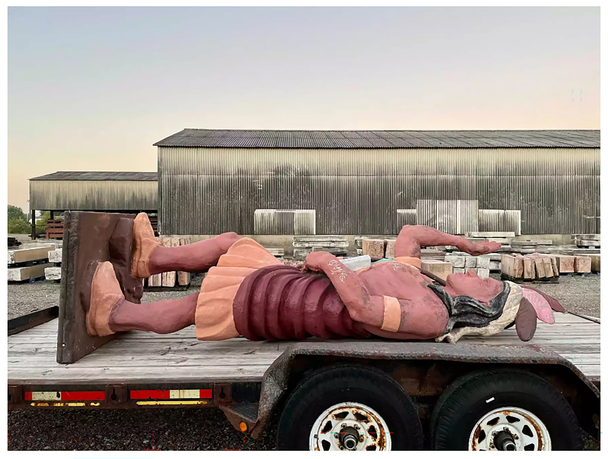
Founded in 2002, National Building Arts Center (NBAC) fosters understanding of America’s built environment—past and future—by promoting creative public engagement and experimental research with its unparalleled collection of architectural artifacts and archives. NBAC holds the largest collection of built environment artifacts in the United States, and a vast array of architectural elements from St. Louis and New York. NBAC also maintains an extensive archive and library that offers an expansive body of knowledge around the American historic built environment, including architectural design, manufacturing, and labor. These archives are activated through exhibitions developed in partnership with contemporary art and architecture institutions, and through workshops with skilled craftspeople. NBAC is supporting a new generation of preservationists that believe preservation is a form of public health